Ingredient guide
L-Ascorbic Acid (Pure Vitamin C)
INCI name · ASCORBIC ACID
In short
L-Ascorbic Acid (Pure Vitamin C) (also known as Vitamin C) is a skincare active generally associated with tone and pigmentation, firmness and elasticity and visible redness. It is often chosen for oily, dry, sensitive and combination skin. MIRU describes it by what is visible on skin, never as a treatment or cure.
Skin type
Oily · Dry · Sensitive · Combination
Best used
Morning
What it is
L-Ascorbic acid is the only biologically active vitamin C stereoisomer; mechanism: (1) inhibits tyrosinase at the Cu2+ active site to reduce melanin synthesis; (2) acts as cofactor for prolyl and lysyl hydroxylase enzymes essential for collagen biosynthesis. Deficiency causes scurvy; (3) directly scavenges singlet oxygen and hydroxyl radicals and regenerates vitamin E from its oxidised tocopheroxyl radical, amplifying the antioxidant network; (4) reverses UV-induced photoaging by upregulating Type I and III collagen mRNA; clinical evidence: 10-20% LAA in pH 2.5-3.5 vehicle produces statistically significant improvement in fine lines, PIH, and solar lentigos in multiple RCTs over 12 weeks; the major limitation is stability, LAA oxidises in water to dehydroascorbic acid (yellow) and then irreversibly to diketogulonic acid (brown), single-use ampules, anhydrous formulations, or ascorbyl sulfate buffer systems maximise shelf stability; combination with 0.5% ferulic acid + 15% tocopherol (CE Ferulic model) enhances photostability 8× and increases collagen synthesis synergistically; pH is the critical formulation variable. Above pH 3.5, penetration decreases markedly; stings on sensitised or compromised barrier skin.
Evidence receipt
ModerateVitamin C (topical) · applied to skin
Based on 2 sources
Open the citable recordStudied in relation to brighter, more even-looking skin and collagen support over time. Formulation and freshness matter.
See 2 sources
Double-blind half-face trial: vitamin C side showed significant photoaging-score improvement at 12 weeks (cheeks P=0.006).
photoaging score
Dermatologic Surgery, 2002Review: support for topical vitamin C in collagen synthesis, photoprotection (adjunct, not a sunscreen) and pigmentation.
collagen synthesis, photoprotection, pigmentation
Dermatologic Surgery, 2005
Affiliation note. Publication links report the study authors and their affiliations. MIRU does not infer independence from an affiliation alone.
When to use it
Mornings, under sunscreen. Its antioxidant role suits daytime.
Daily is common once your skin is used to it.
On the label
Commonly 10–20% on labels
Around 15% is the well-studied middle. Above 20% tends to add sting faster than benefit.
Pairs well with
Give these space
The same rules the product checker and routine builder run. Friendly scheduling, not prohibitions.
Where it sits
A morning serum step. After cleansing, under moisturiser and sunscreen.
- Cleanse
- Tone
- L-Ascorbic Acid
- Moisturise
- SPF
Also found as
Related
Compare products
Browse product comparisonsWhere to find it
Examples, not a ranking. A product lookup can confirm identity and background; a verdict still needs the full ingredient list.

The reference vitamin C serum. It oxidises with time, so buy the size you will finish.
15% L-ascorbic acid
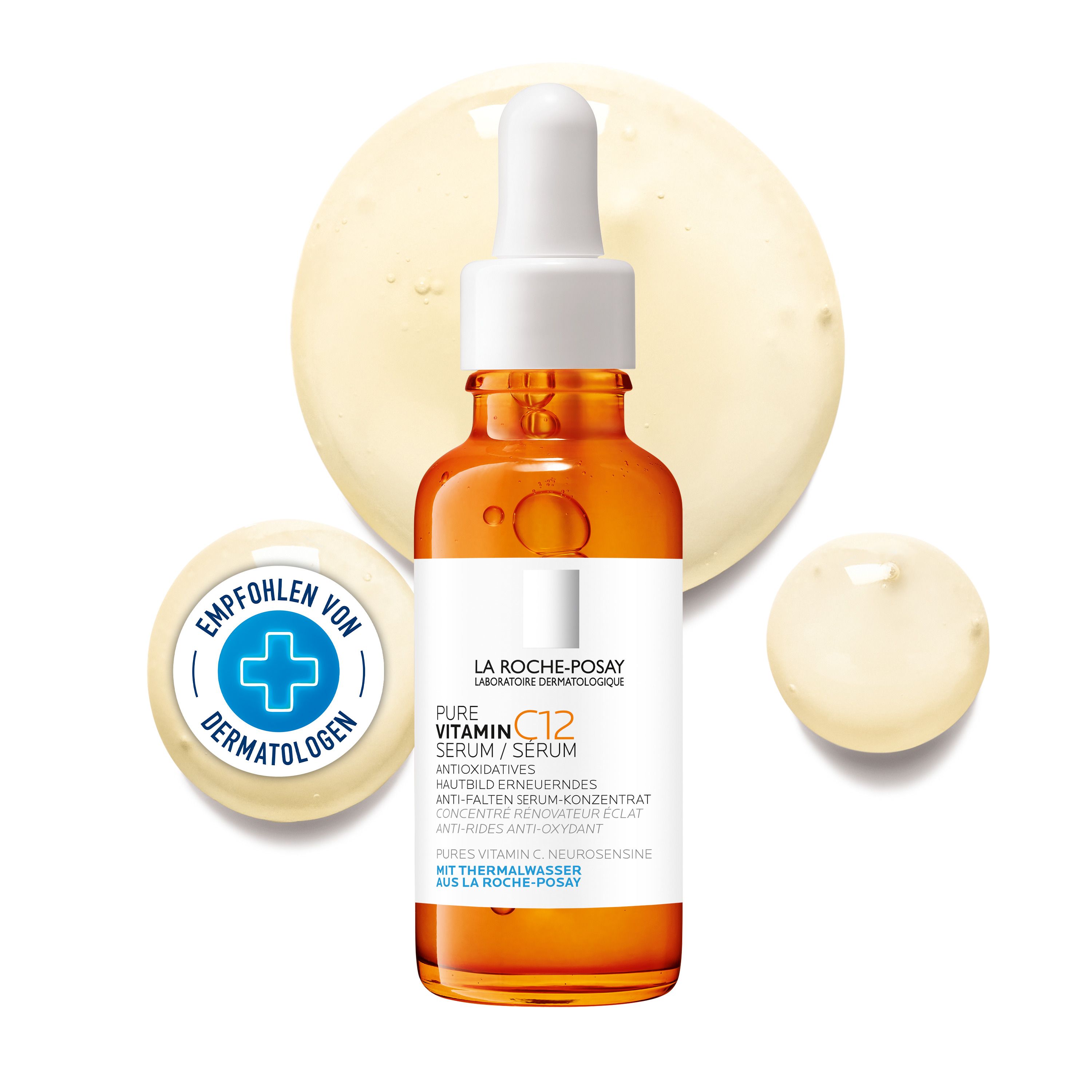
La Roche-Posay Pure Vitamin C12 Serum
Vitamin C at a pharmacy price. Expect tingle on first use rather than sting.
12% pure vitamin C

Arencia Vitamin C Booster Shot
Vitamin C booster serum. Tone work shows up over months, not days.
Product discovery is not efficacy proof. These examples are not ranked by commission.
Common questions
What does L-Ascorbic Acid (Pure Vitamin C) do for skin?
L-Ascorbic Acid (Pure Vitamin C) is associated in published research with tone and pigmentation, firmness and elasticity and visible redness. L-Ascorbic acid is the only biologically active vitamin C stereoisomer; mechanism: (1) inhibits tyrosinase at the Cu2+ active site to reduce melanin synthesis; (2) acts as cofactor for prolyl and lysyl hydroxylase enzymes essential for collagen biosynthesis. Deficiency causes scurvy; (3) directly scavenges singlet oxygen and hydroxyl radicals and regenerates vitamin E from its oxidised tocopheroxyl radical, amplifying the antioxidant network; (4) reverses UV-induced photoaging by upregulating Type I and III collagen mRNA; clinical evidence: 10-20% LAA in pH 2.5-3.5 vehicle produces statistically significant improvement in fine lines, PIH, and solar lentigos in multiple RCTs over 12 weeks; the major limitation is stability, LAA oxidises in water to dehydroascorbic acid (yellow) and then irreversibly to diketogulonic acid (brown), single-use ampules, anhydrous formulations, or ascorbyl sulfate buffer systems maximise shelf stability; combination with 0.5% ferulic acid + 15% tocopherol (CE Ferulic model) enhances photostability 8× and increases collagen synthesis synergistically; pH is the critical formulation variable. Above pH 3.5, penetration decreases markedly; stings on sensitised or compromised barrier skin. MIRU frames ingredients by what is visible, not by medical claims.
When should I use L-Ascorbic Acid (Pure Vitamin C)?
L-Ascorbic Acid (Pure Vitamin C) is typically used in the morning. Introduce any new active on its own first and add one product at a time so you can see how your skin responds.
Is L-Ascorbic Acid (Pure Vitamin C) suitable for my skin type?
L-Ascorbic Acid (Pure Vitamin C) is often chosen for oily, dry, sensitive and combination skin. It is generally considered well tolerated. If your skin is reactive, patch-test first and watch for any irritation.
Stay in the loop
Get launch updates and occasional product news.
Unsubscribe anytime.
Checking a complete formula? Paste or photograph the ingredient list for the full verdict.
Personal guidance, not medical advice.