Ingredient guide
Retinol
INCI name · retinol
Who to ask
Your doctor, midwife or pharmacist is the right person for this, not a skincare rule.
Prepare notes for the appointmentA one page summary of your readings, built on your device.In short
Retinol (also known as Vitamin A) is a skincare active generally associated with skin texture and smoothness, tone and pigmentation, firmness and elasticity and the look of pores. It is often chosen for dry, combination and oily skin. MIRU describes it by what is visible on skin, never as a treatment or cure.
Skin type
Dry · Combination · Oily
Best used
Evening
What it is
Studied in relation to texture and elasticity, with results that differ a lot between trials. Start 2–3 nights a week. Sensitive or dry skin simply ramps more slowly.
Evidence receipt
LimitedRetinol (over the counter) · applied to skin
Based on 2 sources
Open the citable recordStudied in relation to fine lines and surface texture, with results that vary a lot between trials.
Studied as Retinol (over the counter): 0.4% retinol lotion.
Retinol is not the same molecule as prescription tretinoin and the evidence is not the same either. Trials are small, formulations differ, and an over the counter product is not required to state how much retinol it contains.
See 2 sources
Systematic review of nine randomised trials: four found no significant difference between retinol and vehicle. The five that did gave weak evidence for a mild effect on fine wrinkle lines only, with major methodological flaws.
fine facial wrinkles
J Clin Aesthet Dermatol, 2021Vehicle-controlled trial of 0.4% retinol in ARM skin, 24 weeks, in 36 residents of two senior citizen facilities, mean age 87: fine wrinkle scores improved against vehicle (-1.64 vs -0.08, P<.001), with higher glycosaminoglycan and procollagen I expression.
fine wrinkles, skin matrix synthesis · 0.4% retinol lotion
Arch Dermatol, 2007
Affiliation note. Publication links report the study authors and their affiliations. MIRU does not infer independence from an affiliation alone.
When to use it
Evenings. Retinoids are delicate and light-sensitive, so they belong at night.
Start ~2 nights a week and build up slowly.
On the label
Usually 0.1–1% on labels
Lower figures still earn results, and formulation matters as much as the number. Starting low is the classic path.
Pairs well with
Give these space
The same rules the product checker and routine builder run. Friendly scheduling, not prohibitions.
Where it sits
An evening treatment step. On dry skin after cleansing, with moisturiser to follow.
- Cleanse
- Tone
- Retinol
- Moisturise
Also found as
Related
Compare products
Browse product comparisonsWhere to find it
Examples, not a ranking. A product lookup can confirm identity and background; a verdict still needs the full ingredient list.
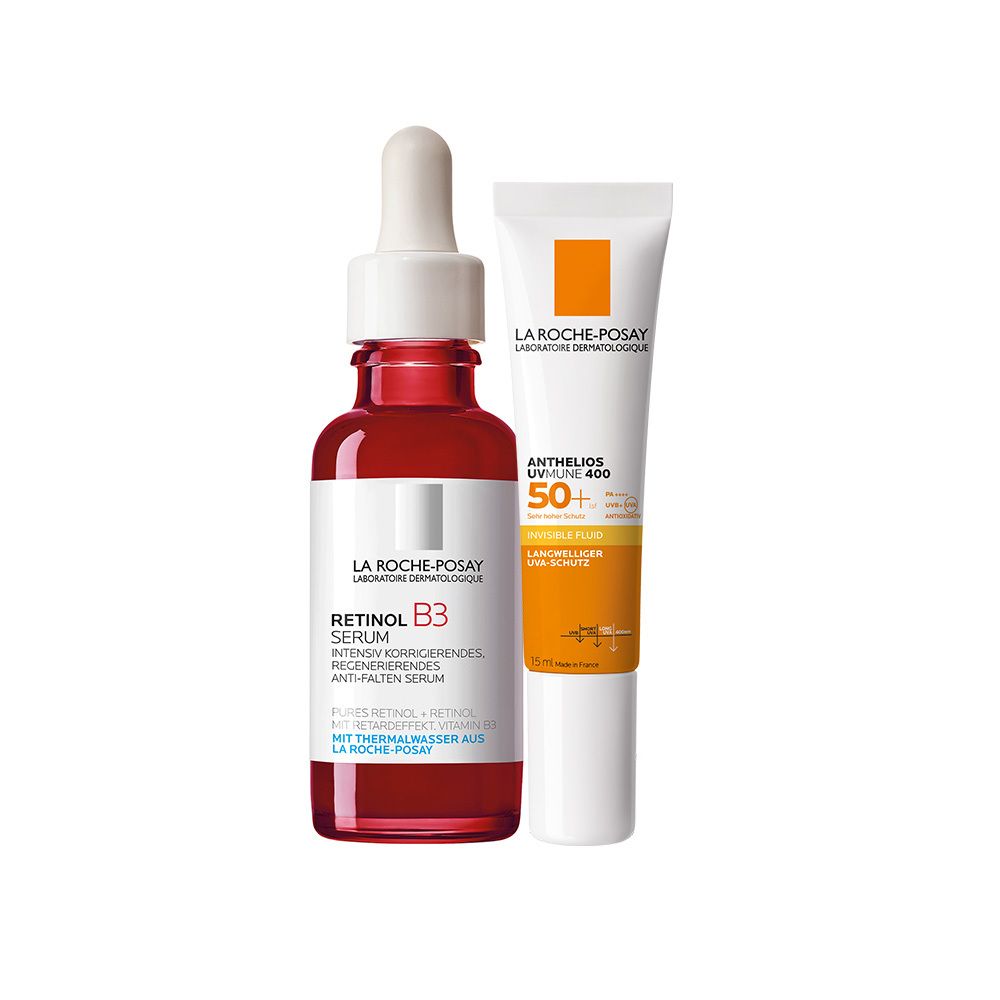
La Roche-Posay Retinol B3 Serum
Retinol serum. Build up slowly and keep it away from acid nights.

Purito Seoul Retinol Retinal 2000 NAD+ Serum
Retinal serum. Build up slowly and keep it away from acid nights.
0.1% retinol (1,000 ppm)
0.1% retinal (1,000 ppm)
Two separately declared retinoids; MIRU never adds their percentages together.
EU · EU cosmetics limits are 0.05% retinol equivalent in body lotion and 0.3% in other leave-on or rinse-off products. New products: 1 November 2025; products already on the market: 1 May 2027. Source
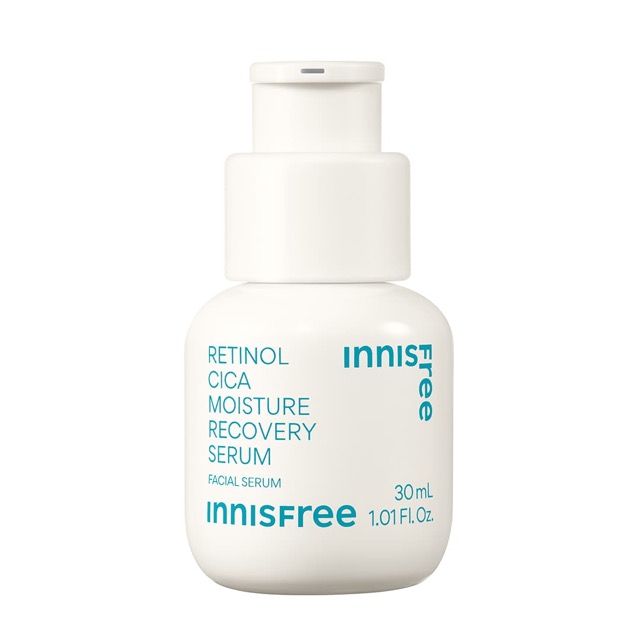
innisfree Retinol Cica Ampoule
Beginner retinol-cica serum; introduce slowly and keep morning SPF non-negotiable.
Product discovery is not efficacy proof. These examples are not ranked by commission.
Common questions
What does Retinol do for skin?
Retinol is associated in published research with skin texture and smoothness, tone and pigmentation, firmness and elasticity and the look of pores. Studied in relation to texture and elasticity, with results that differ a lot between trials. Start 2–3 nights a week. Sensitive or dry skin simply ramps more slowly. MIRU frames ingredients by what is visible, not by medical claims.
When should I use Retinol?
Retinol is typically used in the evening. Introduce any new active on its own first and add one product at a time so you can see how your skin responds.
Is Retinol suitable for my skin type?
Retinol is often chosen for dry, combination and oily skin. It can be used with care. If your skin is reactive, patch-test first and watch for any irritation.
Stay in the loop
Get launch updates and occasional product news.
Unsubscribe anytime.
Checking a complete formula? Paste or photograph the ingredient list for the full verdict.
Personal guidance, not medical advice.